
Kling 3.0 is one of the more capable AI video generation models available to marketers right now, but most explanations of it are either written for developers or buried inside generic AI news roundups. This article breaks down what Kling 3.0 actually does feature by feature, in plain terms, so marketers can understand what it's genuinely good at before spending time experimenting with it directly.
1. What Kling 3.0 Is Designed For
Kling 3.0 is built around generating longer, more coherent video sequences with stronger physics and motion realism than earlier AI video models, where objects, fabric, hair, and liquids behave in ways that look natural rather than glitchy or warped.
For marketers, the practical takeaway is that Kling 3.0 holds up better across longer shots and more complex movement, which matters for anything beyond a simple static product spin.

2. Core Features Worth Knowing
- Multi shot generation: Can produce sequences with multiple distinct shots that maintain visual continuity, useful for narrative style ads rather than single isolated clips.
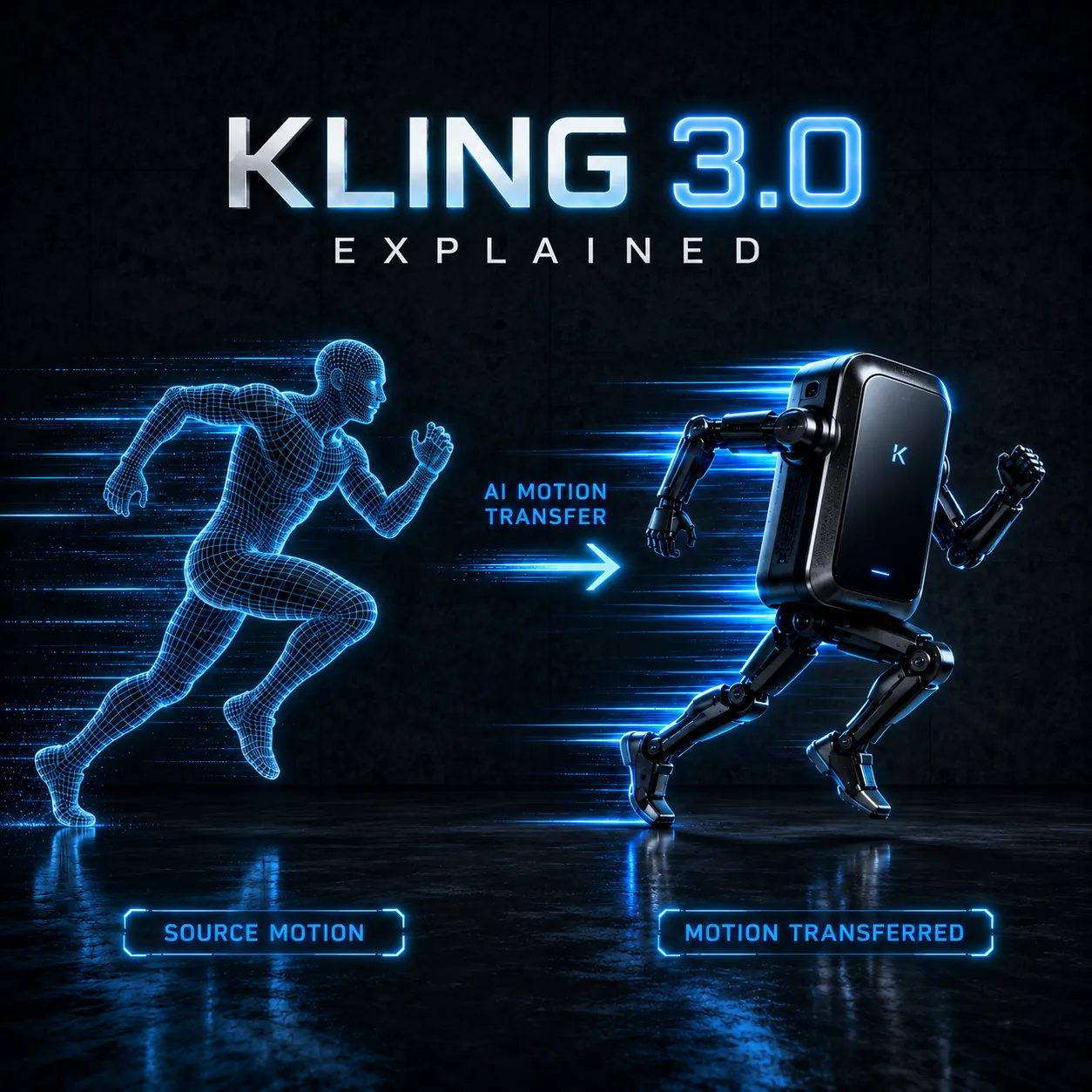
- Motion transfer: Can apply the motion and camera movement from a reference video onto a different subject or character, useful for recreating a proven ad style with your own product or presenter.
- Native audio generation: Can generate matching audio, ambient sound or basic dialogue, alongside the video rather than requiring a fully separate audio production step.
- Strong physical realism: Handles complex motion, like flowing fabric, liquid pours, or natural walking gait, more convincingly than earlier generation models.
- Image to video and text to video modes: Can animate a static reference image or generate a scene purely from a text description, depending on what assets you start with.
3. Where This Maps to Real Marketing Tasks
- Product demo videos generated directly from existing product photography, without a physical shoot.
- Recreating a competitor or reference ad's camera movement and pacing with your own product through motion transfer.
- Short narrative ads with multiple shots, a hook, a product reveal, and a closing call to action, generated as one coherent sequence.
- Rapid creative testing, generating several stylistic variations of the same concept to A/B test before committing media budget.
4. Motion Transfer: The Feature Most Marketers Overlook
Motion transfer deserves particular attention because it solves a specific, common marketing problem: you've seen a competitor's or inspiration ad with great pacing and camera movement, but you can't legally reuse their footage or actors.
Motion transfer lets you apply that same camera movement and motion pattern to your own product or presenter image, effectively letting you learn from what's working in the market without copying anyone's actual footage.
5. Practical Limitations to Know Before Using It
- Longer, more complex sequences generally need more iteration and review before they're publish ready.
- Native audio generation is a strong starting point but often still benefits from a professional voiceover pass for final commercial use.
- Like all AI video tools, brand and product accuracy should be reviewed carefully, especially for regulated industries like beauty or health.
6. How Kling 3.0 Fits Alongside Other AI Video Tools
Kling 3.0 isn't the only strong AI video option, Seedance 2.0, for instance, leans more heavily into identity and character consistency across shots. In practice, agencies often pick the model based on the specific task: Kling 3.0 for motion heavy or multi shot sequences, and identity focused models when a consistent spokesperson or character needs to appear across an entire campaign.
Conclusion: A Genuine Production Tool, Not Just a Novelty
Kling 3.0's real strength for marketers is producing longer, more believable motion at a fraction of the cost and time of a traditional video shoot, particularly useful for testing creative concepts before investing in full production.
At ItsAIMarketing, we evaluate each AI video model against the specific job it needs to do, rather than defaulting to one tool, so clients get the right output for narrative ads, product demos, or motion heavy creative.