
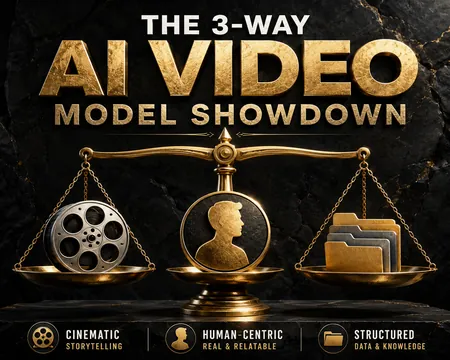
Marketers now have three genuinely strong AI options for video and multimodal content, Kling 3.0, Google's omni-modal AI stack, and Seedance 2.0, and they are not interchangeable. Each was built around a different core strength, and using the wrong one for a given task wastes time and produces weaker output. This guide compares the three side by side on the features that actually matter for marketing work, so you can pick the right tool for the job instead of defaulting to whichever one you tried first.
1. The One Sentence Difference Between Each Tool
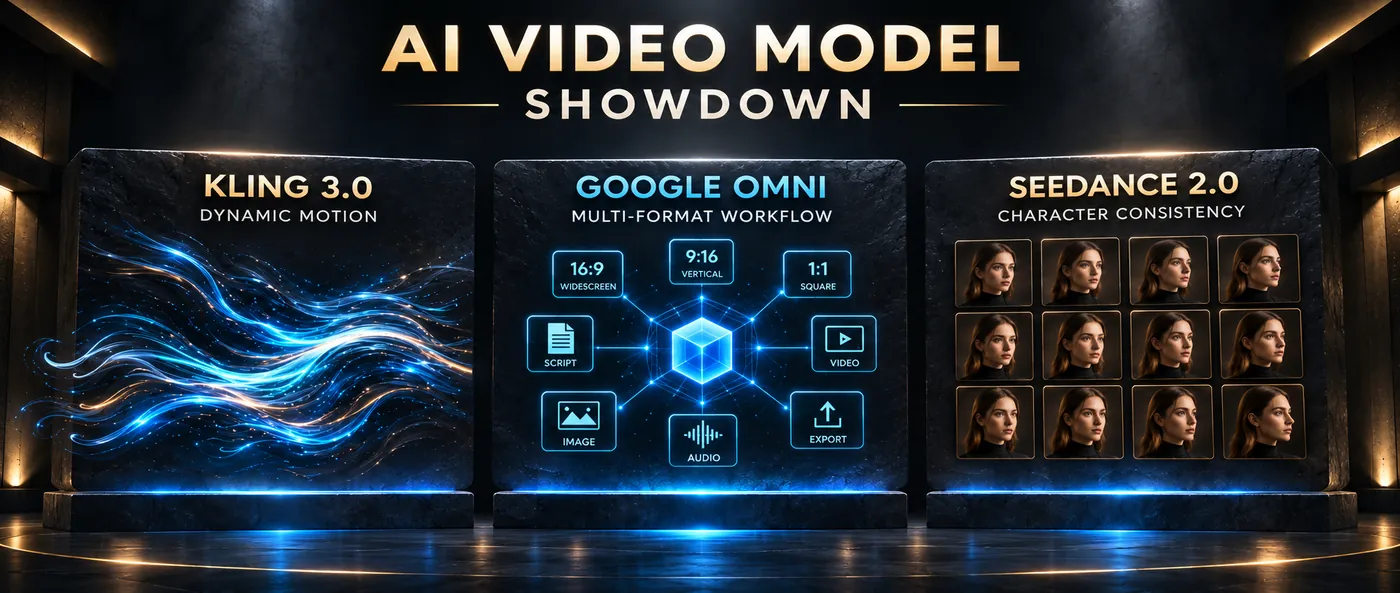
Kling 3.0 is built around motion realism and multi shot video sequences. Google's omni-modal AI is built around connecting text, image, video, and audio into one continuous workflow from a single brief. Seedance 2.0 is built around identity and character consistency across an entire video campaign.
Understanding this core distinction is more useful than any feature checklist, because it determines which tool solves your actual bottleneck.
2. Side by Side Feature Comparison
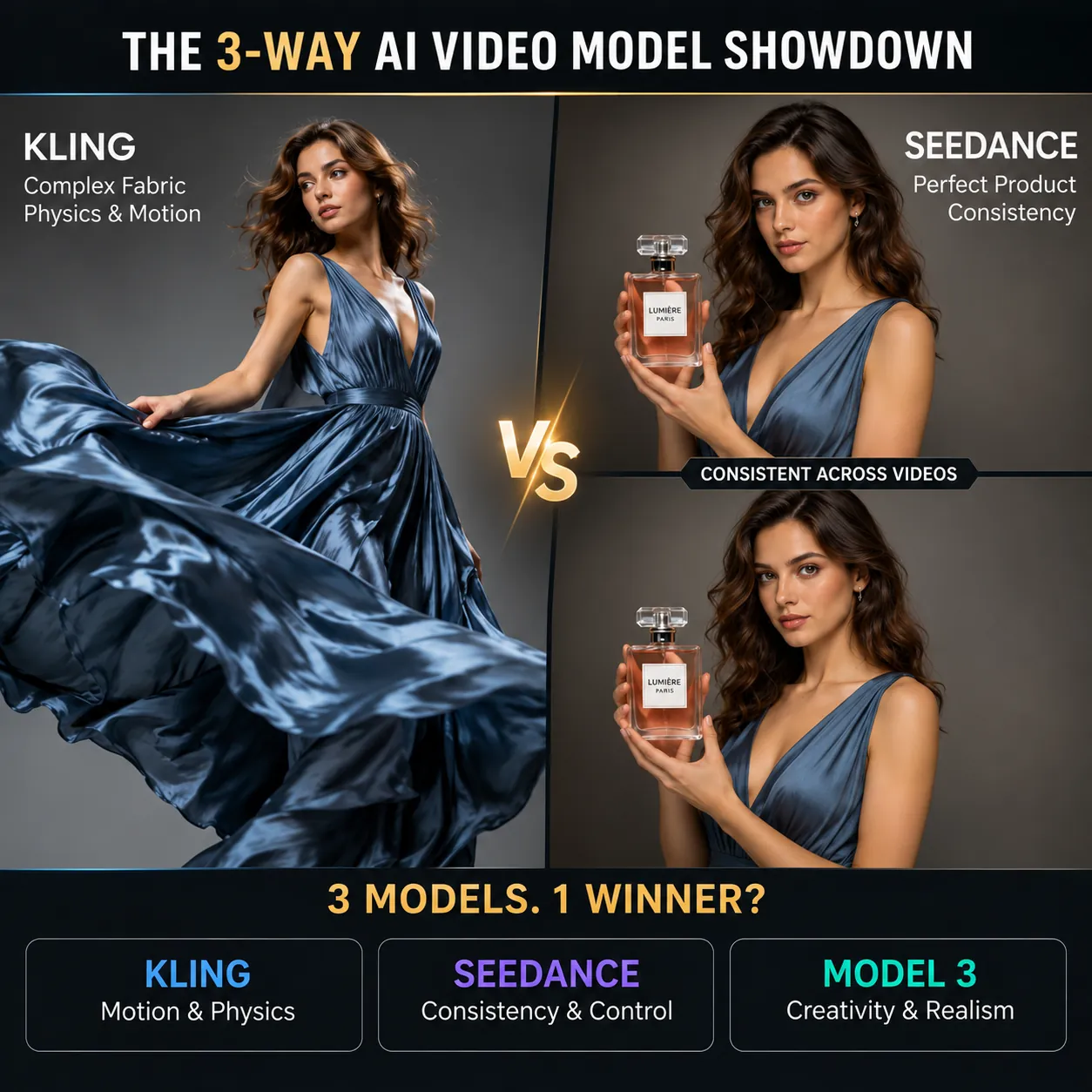
- Strongest for motion and physics: Kling 3.0, fabric, liquid, and complex camera movement hold up best.
- Strongest for cross format consistency: Google's omni-modal AI, since one model carries context across copy, image, video, and audio.
- Strongest for character or product identity: Seedance 2.0, keeping a spokesperson or product visually consistent across multiple clips.
- Strongest for multi shot narrative ads: Kling 3.0 and Seedance 2.0 both handle this, but for different reasons, Kling for motion continuity, Seedance for subject consistency.
- Strongest for full campaign workflows: Google's omni-modal AI, since it can move from brief to copy to visual to video within shared context.
3. When to Reach for Kling 3.0
Choose Kling 3.0 when the success of the ad depends on how things move, a product demo with liquid pouring, a lifestyle shot with natural fabric movement, or an ad that needs to recreate a specific competitor's camera style through motion transfer.
It is also the strongest option when you need native audio generated alongside the video rather than added as a separate production step.
4. When to Reach for Google's Omni-Modal AI
Choose the omni-modal approach when the bottleneck isn't any single asset, it's coordinating many assets that need to share the same context, copy, image concepts, and a video script all derived from one brief without losing brand consistency between them.
It is also the better fit when a campaign needs to scale across formats and languages quickly, since the shared context reduces the re-briefing that normally happens between separate tools.
5. When to Reach for Seedance 2.0
Choose Seedance 2.0 when a specific product, presenter, or character needs to appear identically across an entire campaign, multiple shots, multiple ad variants, or a full video series, where visual drift between clips would break the brand experience.
It is also a strong choice for image to video work, turning a single product photo into a complete motion ad without a physical shoot.
6. Where These Tools Overlap, and Where That's a Trap
All three can technically generate video from text or an image, which makes it tempting to treat them as interchangeable. In practice, picking based on the headline capability rather than the underlying strength is the most common mistake we see, using Kling for a brand consistency heavy campaign, or Seedance for a motion heavy product demo, both produce noticeably weaker results than matching the tool to its actual strength.
7. A Practical Decision Framework
- Is the core challenge motion and physical realism? Choose Kling 3.0.
- Is the core challenge coordinating copy, image, and video from one brief efficiently? Choose an omni-modal workflow.
- Is the core challenge keeping a character or product consistent across many shots? Choose Seedance 2.0.
- Is the campaign large enough to need more than one of these? Many production pipelines now combine all three at different stages.
Conclusion: Use the Right Tool, Not the Familiar One
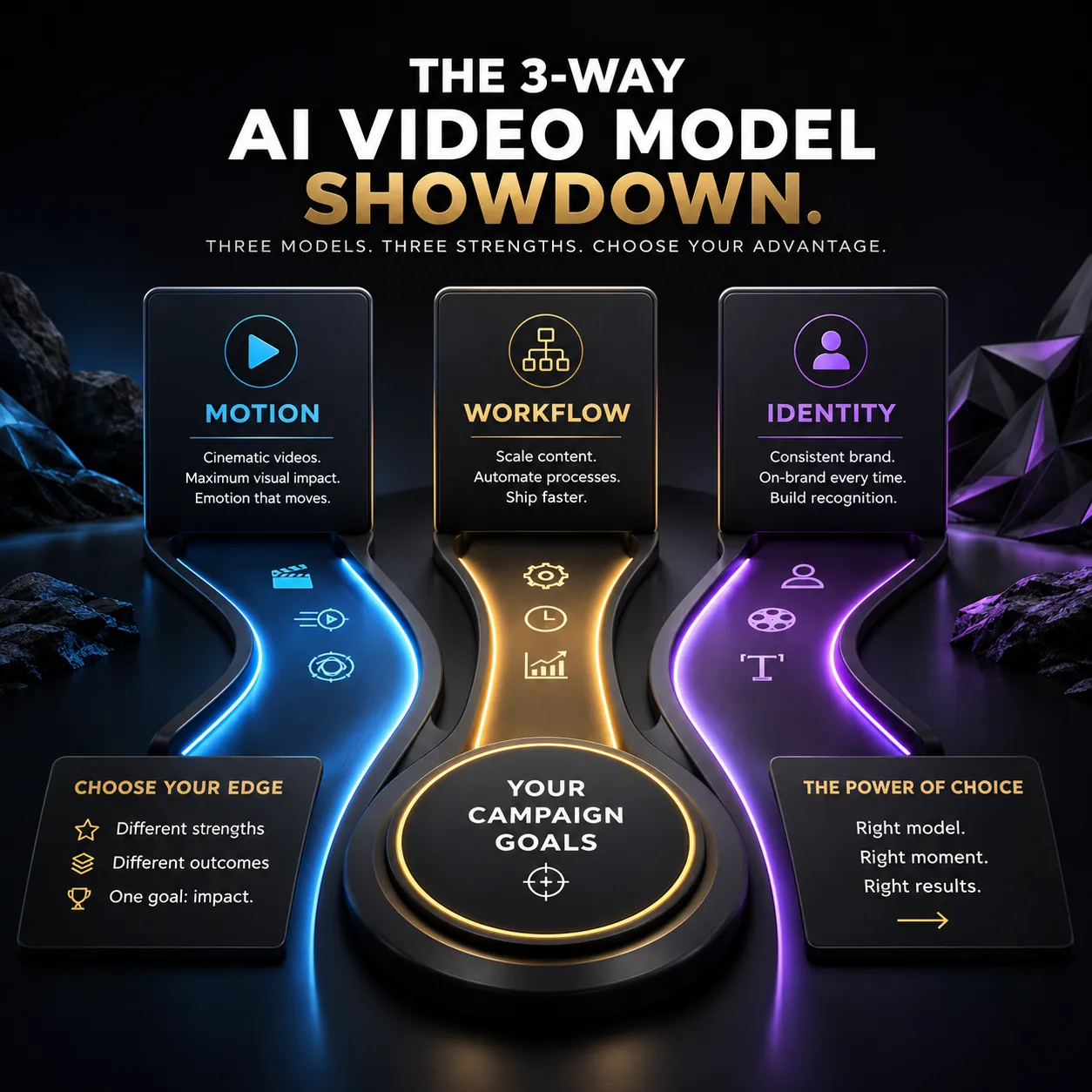
Kling 3.0, Google's omni-modal AI, and Seedance 2.0 are not competing for the same job, they are built around different production bottlenecks, motion, coordination, and consistency, respectively.
At ItsAIMarketing, we select the AI tool based on what a specific campaign actually needs rather than standardizing on one platform, which is why our production pipelines often combine multiple AI models across a single client campaign.